

How to Choose the Best Technical Translation Services in Mumbai for Your Industry
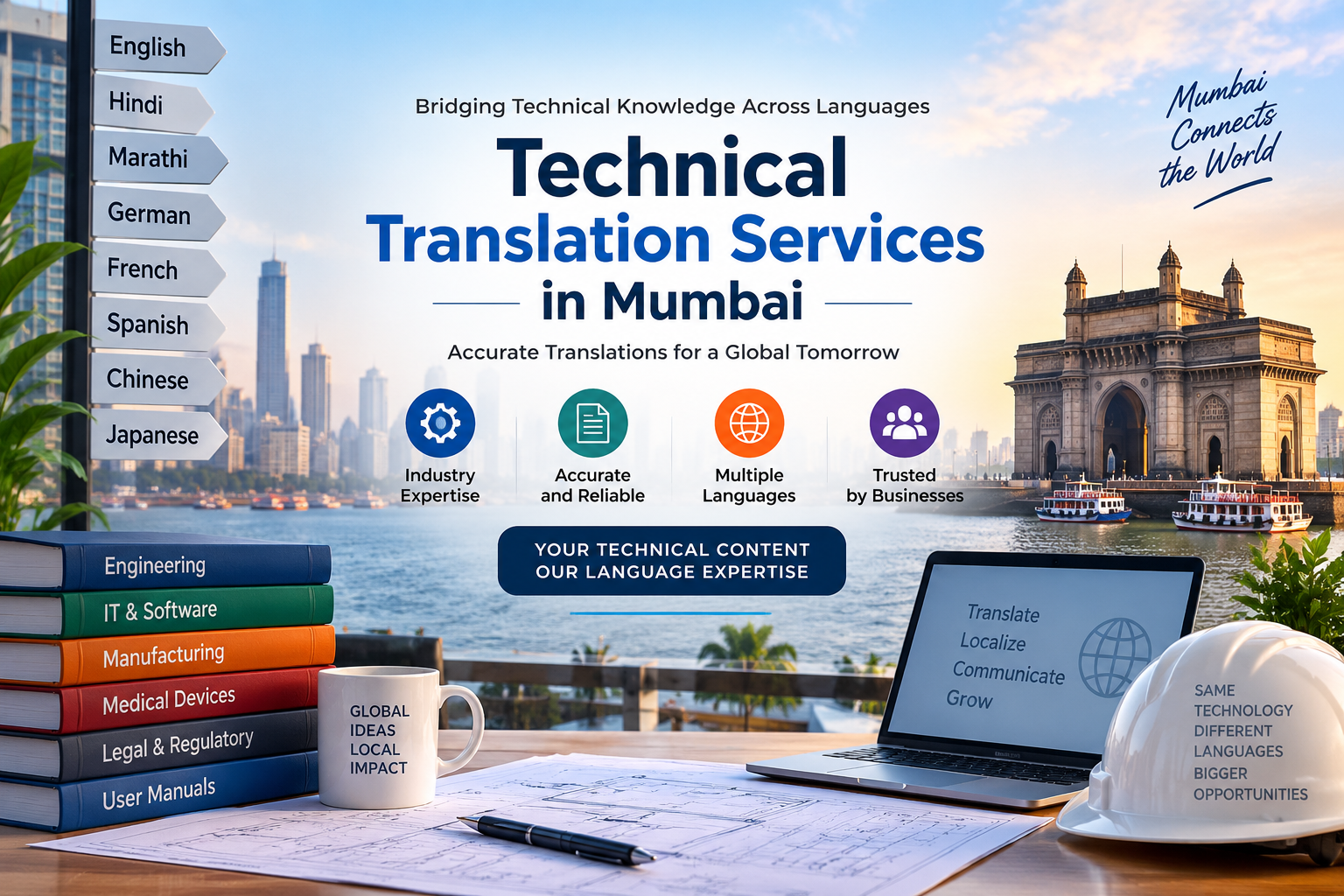
If you've ever tried to localize a user manual, patent filing, or engineering spec sheet, you know that technical translation is nothing like translating a marketing brochure. One mistranslated term in a safety instruction or a pharmaceutical dosage guide can lead to compliance issues, product recalls, or worse. That's why businesses across Mumbai's manufacturing, IT, pharmaceutical, and engineering sectors are increasingly searching for reliable technical translation services in Mumbai that actually understand their industry, not just their language pair.
Mumbai's position as a commercial and industrial hub means companies here deal with international clients, multilingual documentation, and regulatory bodies that demand precision. Choosing the wrong translation partner isn't just inconvenient, it can be costly. This guide walks you through exactly what to look for.
Why Technical Translation Is Different from General Translation
Technical translation involves specialized subject matter: engineering drawings, software documentation, SOPs, product manuals, chemical data sheets, and legal-technical hybrids like patents. Unlike general translation, it demands:
- Deep familiarity with industry-specific terminology
- Consistency across large documentation sets
- Understanding of formatting standards (CAD files, XML, DITA, etc.)
- Zero tolerance for ambiguity
A translator fluent in a language but unfamiliar with your industry's jargon can unintentionally introduce errors that ripple through your entire documentation set.
Key Factors to Consider When Choosing a Provider
1. Industry-Specific Expertise
Look for a provider with translators who have actual domain knowledge, not just language skills. A team translating for the automotive sector should understand torque specifications and assembly terminology, not just grammar.
2. Quality Assurance Process
Ask about their QA workflow. Reputable agencies use a translate-edit-proofread (TEP) process, often supported by terminology databases and translation memory tools to maintain consistency across projects.
3. Language Pair Coverage
Mumbai businesses often need translations across European, Middle Eastern, and Asian languages simultaneously. Confirm the agency has verified native-speaking linguists for each language pair you need, not just a general pool of freelancers.
4. Confidentiality and Data Security
Technical documents often include proprietary designs or trade secrets. Ensure your provider signs NDAs and has secure file-handling protocols.
5. Turnaround Time Without Compromising Accuracy
Fast delivery matters, but not at the cost of accuracy. Ask how they handle urgent projects and whether rushed work goes through the same QA steps.
Common Challenges Businesses Face
- Inconsistent terminology across multiple documents translated by different vendors over time
- Formatting breakdowns when translated text doesn't fit original layouts (especially with languages that expand text length)
- Lack of subject-matter reviewers leading to technically inaccurate but grammatically correct translations
The solution lies in working with a single, consistent provider who builds a terminology glossary specific to your company and maintains it across projects.
How Lingual Center Approaches Technical Translation
Lingual Center works with Mumbai businesses across engineering, IT, pharmaceuticals, and manufacturing, pairing subject-matter-aware linguists with structured QA processes to ensure documentation stays accurate, consistent, and compliant with industry standards.
FAQs
Q1: What industries need technical translation services most?
Manufacturing, IT, pharmaceuticals, automotive, engineering, and legal-technical sectors rely on it heavily.
Q2: How is technical translation priced?
Typically per word or per page, with pricing varying based on language pair complexity and subject matter.
Q3: Can technical translations be certified?
Yes, for regulatory or legal submissions, certified technical translations are often required.
Q4: What file formats can be translated?
Most agencies handle Word, PDF, XML, InDesign, and CAD-based formats.
Q5: How long does a typical project take?
This depends on document length and complexity; agencies usually provide estimates after reviewing the source file.
Conclusion
Choosing the right technical translation partner in Mumbai comes down to industry expertise, quality control, and consistency. Get in touch with Lingual Center to discuss your documentation needs and find a translation approach suited to your industry.